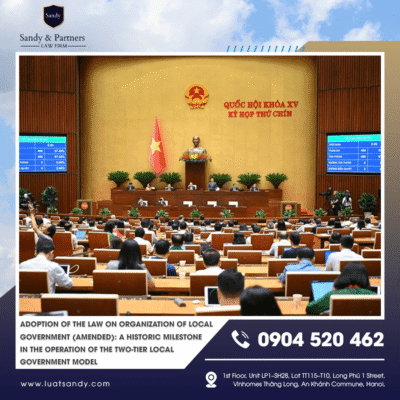


From July 1, a series of laws will take effect. PLO respectfully introduces some notable provisions of these laws.
Three-tier court system model
The Law amending and supplementing a number of provisions of the Law on Organization of the People’s Courts, recently passed by the National Assembly, introduces several key new points, including:
The restructuring of the People’s Court system into a three-tier model: the Supreme People’s Court, provincial-level People’s Courts (at the level of provinces and centrally run cities), and regional People’s Courts, which replace the current district-level courts; the High People’s Courts will be abolished.
The jurisdiction of regional People’s Courts will be expanded in terms of first-instance adjudication, covering civil, marriage and family, commercial and business, labor, administrative cases, and other cases currently handled by district-level courts. Regional People’s Courts will assume these responsibilities starting from July 1, 2025.

The Law also introduces provisions on specialized courts within the International Financial Center, assigning the Council of Judges of the Supreme People’s Court to perform tasks related to the application of common law principles in these specialized courts.
In addition, the new law amends, supplements, and repeals many provisions of the current Law on the Organization of the People’s Courts and related laws to ensure consistency in implementation and organizational structure.
Increase in the number of Supreme People’s Procuracy prosecutors to 27
The Law amending and supplementing a number of provisions of the Law on the Organization of the People’s Procuracy stipulates that the maximum number of prosecutors of the Supreme People’s Procuracy is increased from 19 to 27. This aims to ensure sufficient human resources for prosecution and trial supervision functions of the Supreme People’s Court’s Judicial Council.
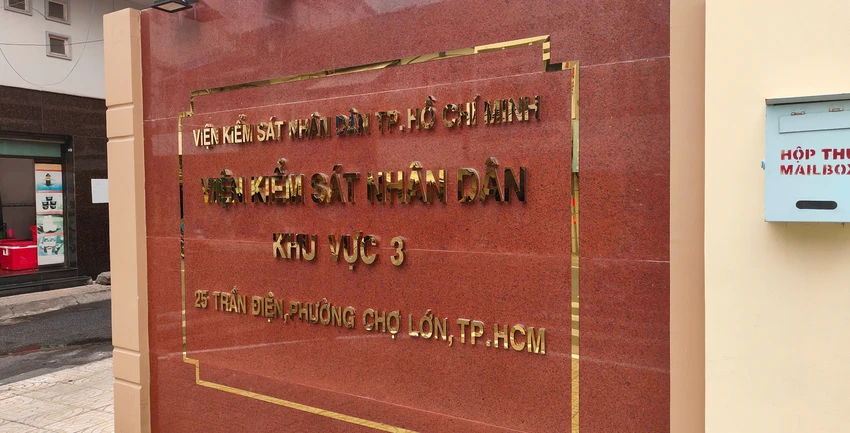
At the same time, the People’s Procuracy system is reorganized from four levels (Supreme, high-level, provincial, and district) into three levels, consisting of the Supreme People’s Procuracy, provincial-level People’s Procuracies, and regional People’s Procuracies. The high-level and district-level People’s Procuracies will cease operations from July 1, 2025.
Abolition of the death penalty for 8 offenses
The Law amending and supplementing a number of provisions of the Penal Code (PC) has abolished the death penalty for eight offenses, including: the offense of conducting activities aimed at overthrowing the people’s administration; espionage; destruction of the material-technical foundations of Vietnam; production and trading of counterfeit medicines and disease prevention drugs; illegal transportation of narcotic substances; embezzlement of property; bribery; and sabotage of peace, causing aggressive war.
Individuals sentenced to death for these eight offenses before July 1, 2025 will not be executed; instead, their sentences will be commuted to life imprisonment.

Notably, for the crimes of embezzlement of property and bribery, after the abolition of the death penalty, in order to ensure the recovery of assets obtained through criminal acts and to encourage offenders to actively confess during the case resolution process, the Law has been amended and supplemented as follows: “A person sentenced to life imprisonment for the crimes of embezzlement of property or bribery may only be considered for a reduction of the prison term if they have voluntarily returned at least three-quarters of the embezzled or bribed assets and have actively cooperated with the competent authorities in detecting, investigating, and handling crimes, or have made significant contributions.”
The Law also adds the offense of illegal use of narcotic substances, in the direction of only prosecuting individuals who are currently undergoing rehabilitation or have just completed drug rehabilitation but continue to use narcotics illegally, in order to reduce drug use and improve management effectiveness.
Expansion of compulsory social insurance participants
The 2024 Law on Social Insurance has added social pension assistance, reducing the eligibility age from 80 to 75 years, and to 70 years for poor individuals, aiming to form a multi-tier social insurance system consisting of social pension assistance, compulsory social insurance, voluntary social insurance, and supplementary pension insurance.
The new Law also reduces the minimum required social insurance contribution period for pension eligibility from 20 years to 15 years, thereby expanding opportunities to receive pensions.
Maternity benefits and occupational accident insurance have been added for voluntary social insurance participants, with a maternity allowance of 2 million VND per child, funded by the state budget.
The scope of compulsory social insurance has been expanded to include registered household business owners, non-professional workers at the commune level, part-time employees, and non-salaried enterprise managers.
Monthly allowance benefits have also been added for workers who do not qualify for pensions and have not yet reached the age for social pension assistance, strengthening the linkage between different benefit tiers.
Expansion of VAT taxable subjects
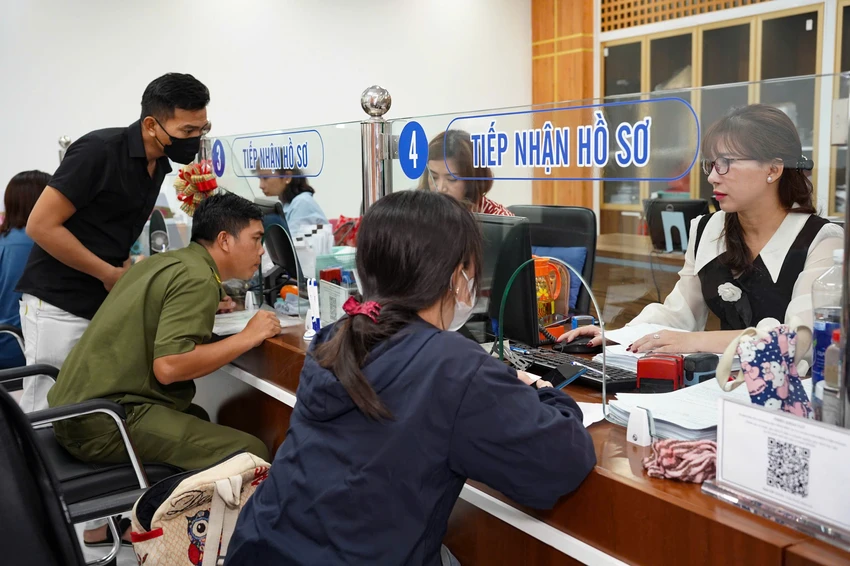
The 2024 Law on Value-Added Tax (VAT) focuses on expanding the scope of taxable goods and services, adding provisions for digital business and e-commerce, adjusting tax rates, and tightening payment documentation requirements to improve tax management efficiency.
Specifically, the Law adds provisions on taxpayers, including foreign suppliers without a permanent establishment in Vietnam who conduct e-commerce activities, as well as organizations operating digital platforms that are responsible for withholding and paying taxes on behalf of foreign suppliers and individual sellers on e-commerce platforms.
Regarding VAT-exempt goods and services, the 2024 VAT Law removes several previously exempt items such as fertilizers, specialized agricultural machinery, offshore fishing vessels, and securities services. At the same time, it expands the taxable base by shifting certain goods and services from non-taxable status to 5% or 10% VAT rates.
The 0% VAT rate is expanded to apply to international transport, construction and installation works performed overseas, goods sold in duty-free zones for outbound travelers, and export services such as leasing transport vehicles outside Vietnam, as well as aviation and maritime services serving international transport.
Notably, from July 1, 2025, purchases of goods and services valued under VND 20 million must have non-cash payment documentation in order to be eligible for input VAT deduction, except for certain special cases.
Application of technology in notarization
The 2024 Law on Notarization, which will soon take effect, focuses on streamlining administrative procedures, improving the quality of notaries, expanding forms and scope of notarization, and especially applying electronic notarization technology to meet modern societal development needs.
Accordingly, the Law introduces provisions on electronic notarization, allowing both in-person and online notarization with requirements for cybersecurity, data protection, digital signatures, and technical infrastructure, helping to accelerate and modernize notarization services from July 1, 2025.
The new Law clearly defines notarization training requirements, setting a 12-month internship period. Certain professionals such as judges and experienced lawyers must still undergo notarization training to improve workforce quality. At the same time, it expands eligibility for establishing notary offices, allowing private enterprises and partnerships to establish notary offices at district level, thereby increasing competition and access to services.
In addition, the Law clarifies the scope of notarization and the authority of notaries, and provides detailed regulations on transactions that require mandatory notarization to ensure transparency and protect the rights of involved parties. It also replaces the term “notarization remuneration” with “fees and service charges,” making the system more practical and transparent.
Notably, from July 1, 2025, notarization signing must be conducted in the presence of a notary and recorded via images included in the notarization dossier.
The new Law also removes the requirement for both the authorizing party and the authorized party to appear together at the notarization organization, making authorization transactions more convenient.
Expanding the scope of protection under the Law on Prevention and Combat of Human Trafficking
The 2024 Law on Prevention and Combat of Human Trafficking introduces several notable changes compared to current regulations:
It expands the groups eligible for protection to include: victims, persons in the process of being identified as victims, persons under 18 years old accompanying victims, relatives of victims, and individuals participating in anti-trafficking activities or supporting victims.
The Law adds the principle of putting victims at the center, respecting and protecting their lawful rights and interests, ensuring gender equality, and allowing, in certain cases, victims who commit legal violations as a consequence of being trafficked to not be subject to criminal or administrative penalties.
It broadens support policies for victims and related persons, including medical assistance, interpretation services, legal aid, vocational training, job counseling, financial assistance for hardship, access to loans, and health insurance support for the first year if they are not yet insured.
It strictly prohibits human trafficking-related acts, including the act of “agreeing to buy and sell humans from the fetal stage,” aiming to prevent related offenses early and from a distance.
International cooperation in preventing and combating human trafficking is strengthened, based on compliance with the Constitution, Vietnamese law, and international treaties to which Vietnam is a party.
The Law also improves regulations on receiving, verifying, identifying, and protecting victims; state management; and clarifies the responsibilities of agencies, organizations, families, and individuals in anti-trafficking efforts.
Health insurance medical examination and treatment without administrative boundary restrictions
The 2024 Law on Health Insurance expands the group of compulsory participants whose contributions are fully or partially covered by the state budget, including: persons aged 75 and above receiving monthly survivor benefits; persons aged 70 to under 75 in near-poor households receiving monthly survivor benefits; village health workers and traditional birth attendants; and members of grassroots security and public order forces.
These new provisions aim to expand access to health insurance benefits, especially for the elderly and people in difficult circumstances. At the same time, they aim to encourage and provide appropriate policies for those who provide healthcare services in remote, mountainous areas and those directly involved in maintaining security and order.
The new Law also regulates health insurance benefit levels under a system of inter-provincial healthcare access without administrative boundary restrictions. It maintains the current benefit ratios and expands them in certain cases.
Accordingly, health insurance participants are entitled to 100% coverage when receiving outpatient care at primary-level health facilities nationwide; 100% coverage for inpatient treatment at basic-level health facilities nationwide;
100% coverage when receiving treatment at any basic or specialized health facility that, before January 1, 2025, was classified as a district-level facility by competent authorities. In particular, in certain cases such as rare or severe diseases, patients may directly access specialized-level facilities.
The Law also changes the conditions for enjoying 5-year continuous health insurance benefits, with co-payment costs exceeding 6 times the reference level (VND 14.04 million from July 1, 2025), for cases of proper referral treatment, emergency care, or correct transfer procedures, as well as emergency cases receiving out-of-network treatment.